
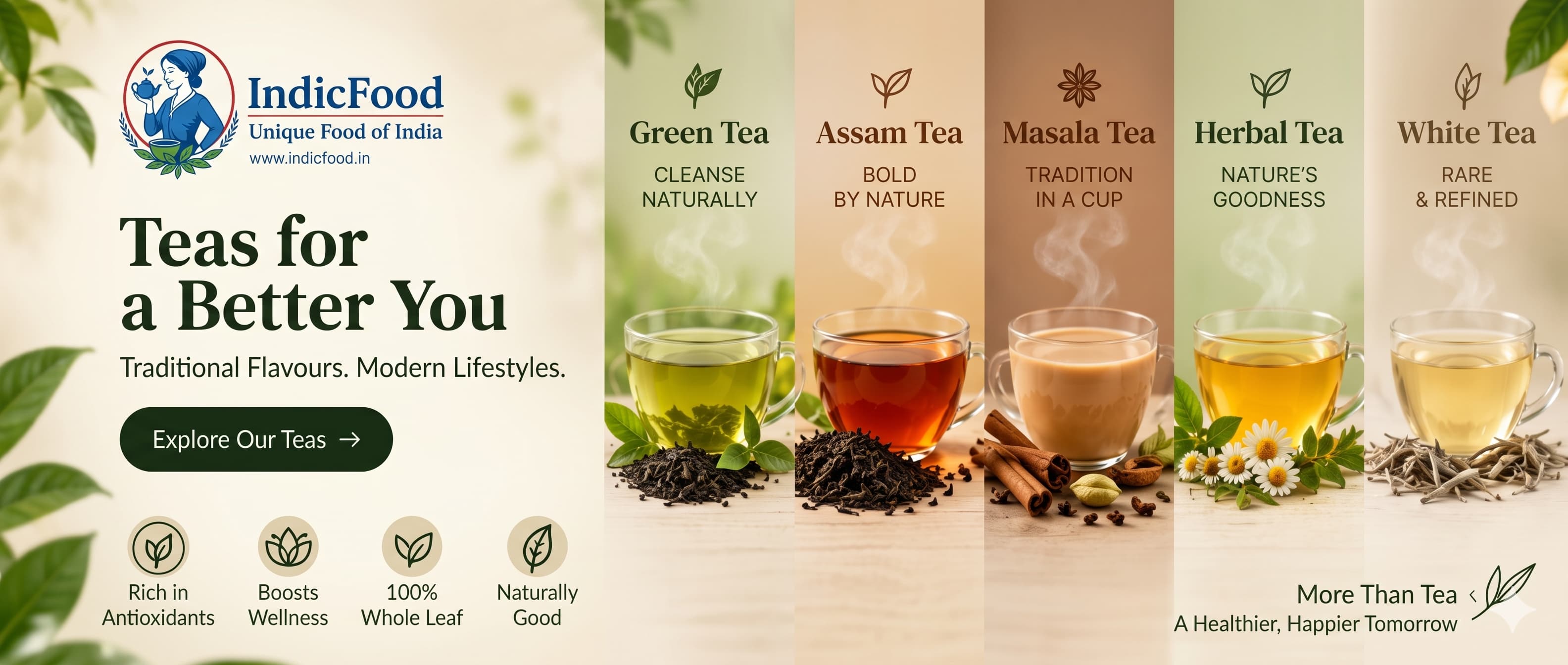
About Indian Tea: A Journey Through India’s Finest Tea Gardens
Discover the rich heritage, diverse flavours, and timeless traditions behind every cup of Indian tea.
India and tea share a beautiful relationship. For millions of people, tea is more than a beverage—it is a morning ritual, a companion during conversations, a welcome gesture for guests, and a comforting pause in a busy day.
But beyond the familiar cup of chai lies a fascinating world of Indian tea: mist-covered Himalayan gardens, lush plantations in Assam, delicate first-flush teas from Darjeeling, fragrant Nilgiri leaves, and specialty teas crafted in smaller growing regions.
At IndicFood, we celebrate the unique foods and flavours of India, bringing the stories behind our country's remarkable products closer to tea lovers.
Let’s explore what makes Indian tea so special.
1. A Brief History of Indian Tea
Tea has a long and fascinating history in India. Indigenous tea plants were found growing in parts of Northeast India, particularly Assam, before commercial tea cultivation developed during the nineteenth century.
Commercial tea production expanded in Assam during the 1830s and subsequently spread to other regions with suitable climates and growing conditions. Over time, India became internationally recognised for its distinctive tea-growing regions and a wide variety of tea styles.
Today, Indian tea is enjoyed in countless forms, from traditional milk chai and spiced tea to delicate whole-leaf green tea, white tea, oolong, and aromatic black tea.
Each cup reflects a combination of geography, climate, cultivation, harvesting, and craftsmanship.
2. The Major Tea-Growing Regions of India
One of the most exciting aspects of Indian tea is the diversity of flavours produced across the country. Different altitudes, rainfall patterns, soils, and processing methods give teas their individual character.
Assam Tea — Bold, Rich and Malty
Located in Northeast India, Assam is one of the world's most renowned tea-growing regions. Its warm, humid climate and fertile Brahmaputra Valley support the production of tea with a strong and full-bodied character.
Assam black tea is often associated with a rich maltiness, a deep colour, and a satisfying taste. It is an excellent choice for traditional Indian chai and breakfast blends.
Best for: Milk tea, strong morning brews, and tea lovers who enjoy a robust cup.
Darjeeling Tea — Delicate, Fragrant and Elegant
Grown in the Himalayan foothills of West Bengal, Darjeeling tea is celebrated for its distinctive aroma and refined flavour. The region's elevation, cool climate, and changing seasons contribute to its remarkable diversity.
Depending on the harvest and processing style, Darjeeling tea can offer floral notes, fresh fruit-like aromas, delicate sweetness, or the characteristic muscatel flavour associated with certain teas.
First-flush teas are often lively and fresh, while second-flush teas can be fuller and more expressive.
Best for: Slow sipping, afternoon tea, and people who appreciate delicate, aromatic flavours.
Nilgiri Tea — Bright, Smooth and Fragrant
The Nilgiri Hills of southern India produce teas known for their fragrant character and bright, clean cup. The region's high-altitude growing areas and varied seasons contribute to its distinctive tea profiles.
Nilgiri teas can be refreshing when served plain and can also work beautifully in iced tea and blended preparations.
Best for: Everyday drinking, refreshing iced tea, and versatile tea blends.
Sikkim Tea — A Taste of the Eastern Himalayas
Sikkim's tea-growing landscape offers a distinctive Himalayan character. The state is especially known for the Temi tea garden, which has helped establish its reputation among specialty tea enthusiasts.
Depending on the tea and harvest, Sikkim teas can display floral, fresh, and gently fruity notes.
Best for: Exploring Himalayan teas and discovering flavours beyond familiar everyday chai.
Other Indian Tea Regions
India's tea story extends well beyond its best-known names. Kangra in Himachal Pradesh, Dooars and Terai in West Bengal, Tripura, and emerging tea-growing areas in Northeast India add further variety to the country's tea landscape.
These regions offer tea lovers opportunities to explore different aromas, textures, and brewing experiences.
3. Understanding the Different Types of Indian Tea
Tea varieties are not defined only by where they grow. The way tea leaves are processed also influences their colour, aroma, taste, and character.
Black Tea
Black tea undergoes extensive oxidation, which develops its characteristic colour and flavour. Indian black teas range from strong, malty Assam varieties to fragrant Darjeeling teas.
Green Tea
Green tea is processed to limit oxidation and preserve a fresh character. Depending on its origin and preparation, it may taste grassy, vegetal, floral, sweet, or gently nutty.
White Tea
White tea is generally made with minimal processing, often using young buds and tender leaves. It can offer a subtle, delicate drinking experience with gentle floral or sweet notes.
Oolong Tea
Oolong tea is partially oxidised, placing it between green and black tea in processing style. Indian oolongs can range from light and floral to fuller, fruitier, and more complex.
Herbal and Flavoured Teas
Tea blends featuring ingredients such as hibiscus, mint, rose, or other botanicals offer a different sensory experience.
Strictly speaking, infusions made entirely from herbs, flowers, or fruits without leaves from the tea plant are not true tea. They are commonly enjoyed alongside traditional teas because of their varied aromas and flavours.
4. What Makes Indian Tea Unique?
Several factors work together to shape the character of Indian tea.
Geography and climate: Temperature, rainfall, altitude, and soil influence the way tea plants grow and develop.
Harvesting season: Spring, summer, monsoon, and autumn harvests can produce different flavour profiles, depending on the region.
Leaf selection: Buds and tender leaves may produce a different character from more mature leaves.
Processing methods: Withering, rolling, oxidation, drying, and other techniques determine much of the final tea's character.
Craftsmanship: The knowledge and care of tea growers, pluckers, and tea makers help transform freshly harvested leaves into the tea we enjoy.
This is why two teas from the same broad region can still taste noticeably different. Exploring Indian tea is an opportunity to discover these differences one cup at a time.
5. Indian Tea Culture: More Than a Drink
From a roadside chai stall to a carefully prepared pot of specialty tea, tea occupies a special place in everyday Indian life.
A steaming cup of masala chai brings together tea, milk, spices, and personal preferences. In many homes, tea accompanies breakfast, welcomes visitors, and provides a reason to pause and talk.
At the same time, a growing appreciation for specialty tea has encouraged more people to explore whole-leaf teas, regional harvests, and different brewing methods.
There is room for both traditions: the comforting familiarity of everyday chai and the slower, more exploratory experience of tasting a fine single-origin tea.
Neither experience needs to replace the other. Both are part of India's remarkable tea culture.
6. How to Brew a Better Cup of Indian Tea
You do not need complicated equipment to enjoy good tea. A few simple practices can help you appreciate its flavour.
-
Choose your tea: Start with a strong Assam black tea for milk chai, a fragrant Darjeeling tea for a lighter cup, or a green tea for a fresh, delicate brew.
-
Use fresh water: Good-quality water helps the natural aroma and flavour come through.
-
Adjust the temperature: Black teas generally tolerate hotter water, while many green and delicate teas benefit from cooler water.
-
Watch the brewing time: Begin with the supplier's recommended instructions and adjust according to taste. Over-steeping can make some teas excessively bitter.
-
Taste before adding ingredients: Try a small sip without milk or sugar when exploring a new tea. This makes it easier to notice its natural character.
-
Store tea properly: Keep tea in an airtight container away from moisture, direct sunlight, heat, and strong odours.
The perfect cup is ultimately the one you enjoy most.
7. Discover the World of Indian Tea with IndicFood
At IndicFood, we believe that India's food heritage deserves to be discovered, appreciated, and shared.
Our tea collection celebrates the diversity of Indian tea, from Assam and Darjeeling to green, white, oolong, and distinctive floral blends. Each style offers a different way to experience the aromas and flavours that make Indian tea so fascinating.
Whether you enjoy the comforting strength of Assam black tea, the delicate character of Darjeeling first flush, the freshness of green tea, or the floral notes of hibiscus and rose blends, there is always something new to explore.
Our journey is guided by a simple idea: unique food of India deserves a place in every curious food lover's journey.
We invite you to discover Indian tea, explore its many flavours, and find a cup that feels uniquely yours.
Explore the IndicFood tea collection: Visit https://www.indicfood.in/ and discover the flavours of India, one cup at a time.
Final Thoughts
Indian tea is a story of land, seasons, craftsmanship, culture, and everyday moments. From the bold teas of Assam to the fragrant gardens of Darjeeling and the refreshing teas of the Nilgiris, every region contributes something different to India's tea heritage.
The next time you prepare a cup, take a moment to notice its aroma, colour, and flavour. You may discover that there is much more to Indian tea than you first imagined.
IndicFood — Unique food of India.